

-11%
$45.00 Original price was: $45.00.$40.00Current price is: $40.00.
Guaranteed Safe Checkout

In professional veterinary clinical practice, managing chronic inflammatory, allergic, and autoimmune disorders requires highly reliable therapeutic solutions. When joint structures degrade due to osteoarthritis or when the immune system triggers severe, systemic dermatological and allergic reactions, standard short-acting corticosteroids are often insufficient. Sustained, targeted relief is required to preserve mobility and animal welfare.
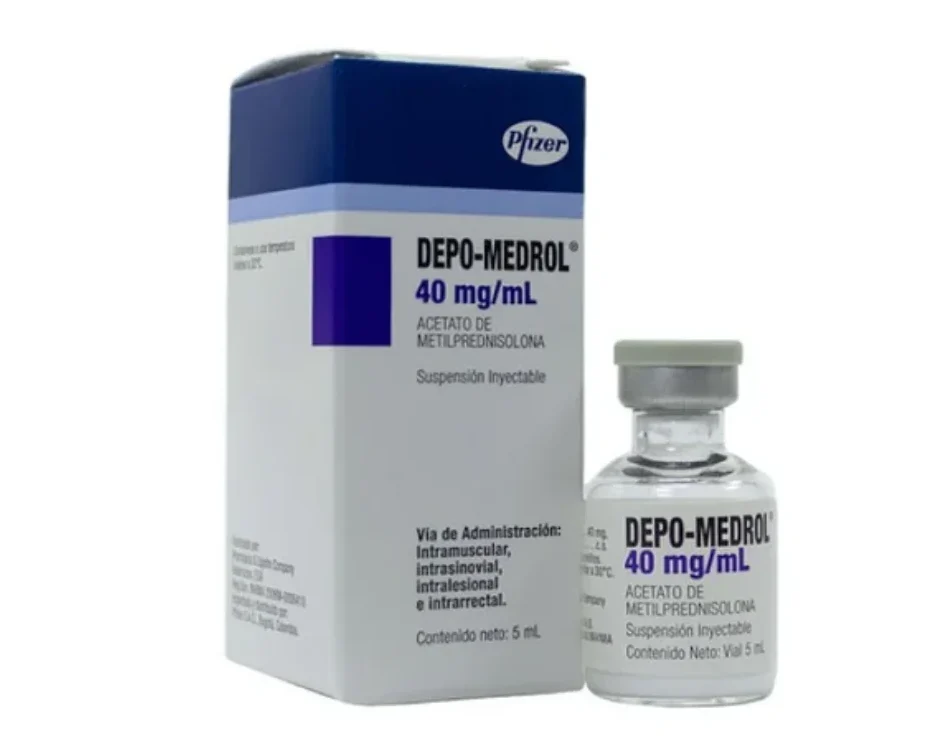
Veterinarians worldwide rely on Depo-Medrol Injection 40mg as a primary long-acting clinical option. Featuring Methylprednisolone Acetate (40 mg/mL), this sterile aqueous suspension is designed to provide sustained, stable glucocorticoid activity over several weeks. Whether administered as a localized intra-synovial treatment for equine arthritis or as an intramuscular injection for feline and canine hypersensitivities, Depo-Medrol is a foundational standard in veterinary inflammation management.
This clinical guide covers the pharmacology, mechanism of action, targeted animal applications, dosing standards, and safety parameters of Depo-Medrol 40mg.
Methylprednisolone acetate is an anti-inflammatory steroid derived from prednisolone. It possesses high glucocorticoid potency and minimal mineralocorticoid (sodium-retaining) activity, making it safer for long-term physiological balance than older, first-generation steroids.
The acetate ester modification makes this compound highly insoluble in water. When injected intramuscularly or intra-synovially, it forms a localized “depot” deposit in the tissue.
Slow Dissolution: The microscopic crystals of methylprednisolone acetate dissolve gradually from the injection site.
Sustained Absorption: Free methylprednisolone enters the systemic circulation or synovial fluid in small, consistent amounts.
Prolonged Action: A single dose delivers continuous anti-inflammatory and immunosuppressive effects lasting from 1 to 5 weeks, reducing the need for daily oral dosing.
Inside the target tissues, methylprednisolone binds to intracellular glucocorticoid receptors, which then move into the nucleus to modify genetic expression. It suppresses cellular inflammatory cascades by:
Inhibiting the release of inflammatory cytokines (such as IL-1, IL-6, and TNF-α).
Blocking phospholipase A2 to shut down the arachidonic acid cascade, preventing the synthesis of prostaglandins and leukotrienes.
Stabilizing lysosomal membranes to prevent cells from releasing destructive enzymes into inflamed tissues.
Depo-Medrol is widely used across three primary species groups for specific therapeutic indications:
Musculoskeletal Conditions: Relief of pain, swelling, and lameness associated with rheumatoid arthritis, osteoarthritis, periostitis, and traumatic joint injuries.
Dermatological Disorders: Management of chronic pruritic eczema, atopic dermatitis, and allergic flea-bite dermatitis.
Allergic Conditions: Controls severe seasonal allergies and acute hypersensitivity reactions.
Feline Asthma & Allergic Bronchitis: Highly effective at suppressing airway inflammation and bronchoconstriction in asthmatic cats.
Eosinophilic Granuloma Complex (EGC): Rapidly reduces oral, cutaneous, and linear eosinophilic plaques.
Severe Dermatitis: Provides prolonged relief for chronic, self-mutilating skin allergies when oral administration of medication is difficult for owners to manage.
Intra-Articular Joint Therapy: Administered directly into the joints to manage localized pain and swelling from bone spavin, osteoarthritis, gonitis, and carpitis.
Systemic Musculoskeletal Relief: Restores competitive mobility by resolving generalized muscular soreness, myositis, and severe back strain.
Because Depo-Medrol is a highly potent, long-acting suspension, dosages must be adjusted precisely according to animal weight, disease severity, and clinical response.
Crucial Warning: Absolutely NOT for Intravenous (IV) Use. Depo-Medrol is an aqueous suspension. Delivering it intravenously can cause severe, life-threatening fat embolisms in the vascular system. It must only be administered via Intramuscular (IM), Intra-synovial (joint), or Intralesional injection routes.
| Target Species | Administration Route | Standard Volume Dose | Equivalent Active Base | Primary Indications |
|---|---|---|---|---|
| Dogs (Small) | Intramuscular (IM) | 0.25 mL to 0.5 mL | 10 mg to 20 mg | Allergies, severe dermatitis, arthritis. |
| Dogs (Medium/Large) | Intramuscular (IM) | 0.5 mL to 2.0 mL | 20 mg to 80 mg | Allergic skin disease, chronic osteoarthritis. |
| Cats | Intramuscular (IM) | 0.25 mL to 0.5 mL | 10 mg to 20 mg | Feline asthma, eosinophilic plaque, eczema. |
| Horses (Systemic) | Intramuscular (IM) | 5.0 mL to 10.0 mL | 200 mg to 400 mg | Generalized muscular soreness, severe strain. |
| Horses (Local Joint) | Intra-synovial | 1.0 mL to 6.0 mL | 40 mg to 240 mg | Osteoarthritis, carpitis, tarsal spavins. |
Due to its prolonged biological half-life, any adverse effects from Depo-Medrol will last longer than those of short-acting, soluble steroids.
Avoid in Active Infections: Do not use in animals with systemic bacterial, viral, or fungal infections unless they are simultaneously treated with appropriate antimicrobial drugs.
HPA Axis Suppression: Repeated doses will suppress adrenal gland function. To prevent adrenal insufficiency, allow the body’s natural hormone levels to recover between treatments, and avoid sudden discontinuation after long-term therapy.
Wound Healing: Glucocorticoids delay wound healing and tissue repair. Avoid administering Depo-Medrol immediately before or after major surgeries.
Diabetes and Renal Issues: Contraindicated in animals with active diabetes mellitus, chronic renal failure, or corneal ulcers.
Store Depo-Medrol 40mg vials upright at controlled room temperature between 20°C and 25°C (68°F to 77°F). Do not freeze. Shake the vial thoroughly immediately before use to ensure the active crystals are evenly suspended in the liquid.
The therapeutic effect of a single intramuscular injection typically lasts between 2 to 5 weeks. This duration varies based on the animal’s metabolic rate, the severity of the clinical condition, and the specific dose administered.
Cats can be notoriously difficult to pill daily. A single injection of Depo-Medrol provides weeks of continuous therapy, eliminating compliance stress for owners and ensuring the animal receives a consistent dose.
Yes. When administered intra-synovially by a qualified veterinarian, Depo-Medrol acts directly on the joint tissues to reduce localized pain and inflammation. Strict aseptic technique must be maintained during joint injections to prevent septic arthritis.
Increased thirst (polydipsia) and increased urination (polyuria) are common, temporary side effects of glucocorticoid therapy. These symptoms typically resolve gradually as the drug level in the body tapers down. Ensure the animal has continuous access to fresh water.
At Equines Vet Care, we are committed to providing verified, high-quality pharmaceuticals to veterinary clinics and livestock managers worldwide. Every vial of Depo-Medrol 40mg is stored in our temperature-regulated facility to protect its sterile stability and clinical efficacy.
Depo-Medrol is a long-acting injectable corticosteroid for use in horses, containing Methylprednisolone acetate It is used in horses to treat (or as part of a therapeutic regime for), musculo-skeletal conditions. It can be given intra-muscularly (not intra-venously) for its anti-inflammatory effects or intra-articularly (into a joint). After intra-articular injection, improvement of clinical signs should be seen within 24-48hours; this lasts for an average of 3-4 weeks but is variable. Working animals should be rested after treatment, to allow the clinical condition to resolve. Long term repeated injections are not recommended.Depo Medrone
In cats & dogs, it can also be given intra-muscularly or intra-articularly depending on the condition. It is used in the treatment of allergic or inflammatory conditions, including skin conditions; musculo-skeletal conditions; ocular/otic (ear/eye) inflammatory conditions & autoimmune disorders.
This product requires a prescription from your vet & will only be dispatched once we receive this prescription.depo-Medrol
Legal Category- POM-V
Warnings & Contraindications- Standard strict asepsis should be followed for intra-articular injection. Not recommended for use in equines with laminitis.
Pregnancy & Lactation- Do not use in mares that are pregnant or lactating.
Passport Requirements- This medication cannot be used in horses intended for human consumption. Your vet must have signed Section 9 of your horse’s passport (or Section 2 for passports issued after 1st January 2016).
For further product information please click on the link below. This will take you to the Veterinary medicines directorate (VMD) website where you can search for the product and see the most up to date Summary of product characteristics (SPC).depo-Medrol
No account yet?
Create an Account
Reviews
There are no reviews yet.