

-6%
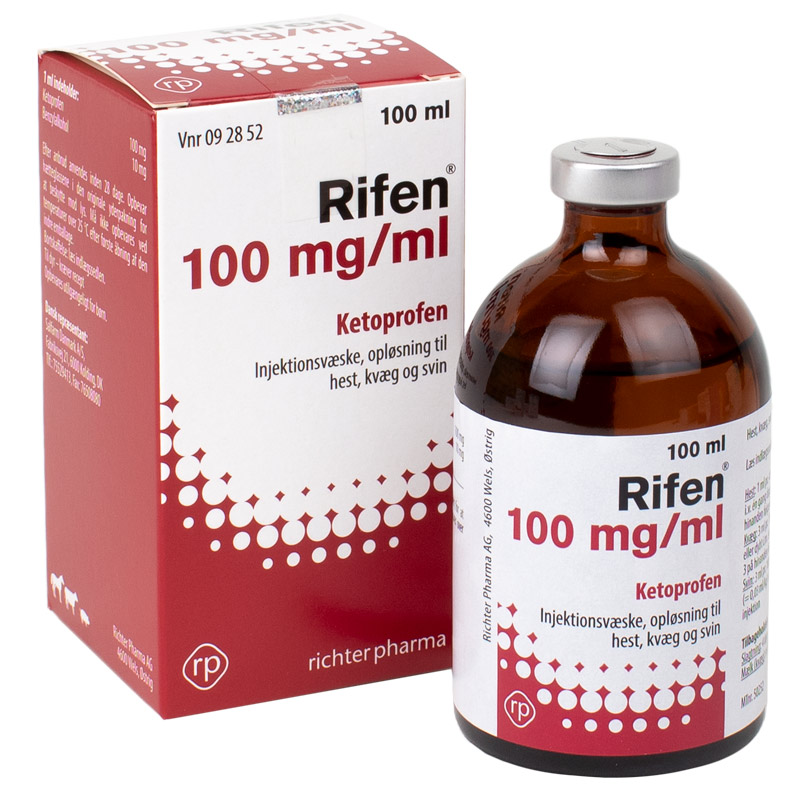

Buy Rifen Injection 100mL for professional veterinary pain and inflammation management in approved animal species. Rifen 100 mg/mL is an injectable veterinary medicine containing ketoprofen 100 mg/mL and is authorized for horses, cattle and pigs in a number of markets. Official veterinary-medicine records identify it as a prescription veterinary product.
Rifen Injection 100mL is a non-steroidal anti-inflammatory drug (NSAID) formulation used for appropriate conditions involving pain, inflammation and, in certain approved species, fever. For horses, approved indications include several acute painful and inflammatory musculoskeletal conditions, postoperative inflammation, symptomatic treatment of colic and fever.
Because Rifen is a prescription veterinary medicine, it should be administered only according to the current product information and appropriate veterinary direction. Product registrations, routes of administration and withdrawal requirements can differ by country.
Rifen Injection 100mL is a veterinary injectable solution containing ketoprofen at 100 mg/mL. The 100mL presentation is documented in official veterinary product databases and manufacturer information.
Ketoprofen belongs to the NSAID class and is used in veterinary medicine for its analgesic and anti-inflammatory properties.
The product is authorized for horses, cattle and pigs in the referenced European product information.
Each 1mL contains:
The official manufacturer’s product information identifies Rifen as a 100mg/mL injectable ketoprofen formulation.
Rifen has established veterinary applications in horses for certain painful and inflammatory conditions.
The referenced product information lists equine indications including:
These conditions can significantly affect mobility, comfort and performance.
Veterinary examination is important before treatment because lameness, colic and other clinical signs can have many different causes.
Musculoskeletal problems are common concerns in horses, particularly animals involved in athletic activity.
Conditions such as arthritis, tendinitis, bursitis and traumatic lameness may involve pain and inflammation.
Ketoprofen can provide analgesic and anti-inflammatory effects when its use is appropriate.
However, controlling pain does not necessarily resolve the underlying injury. Veterinary diagnosis and appropriate rest, rehabilitation or other treatment may also be required.
The product information identifies Rifen as being indicated for symptomatic therapy of colic in horses.
Colic can range from mild gastrointestinal discomfort to a life-threatening emergency.
A horse showing signs such as:
should receive prompt veterinary assessment.
Pain relief should not delay investigation of the underlying cause.
Rifen is also authorized for certain indications in cattle.
The referenced product information lists applications involving inflammation, pain or fever, including respiratory disease, mastitis, musculoskeletal disorders and injuries.
For cattle, appropriate treatment depends on the animal’s condition, diagnosis and applicable local product authorization.
Rifen 100mg/mL is also authorized for pigs in the referenced European product information.
The exact approved indications and administration route should be confirmed against the product information applicable to the country where the medicine is being used.
Ketoprofen is an NSAID that provides analgesic and anti-inflammatory activity.
By reducing pathways involved in inflammatory mediator production, ketoprofen can help reduce pain and inflammation associated with appropriate veterinary conditions.
Because NSAIDs can affect gastrointestinal, renal and other physiological systems, appropriate veterinary assessment is important before treatment.
The dosage and route must follow the current product label for the specific market.
For the referenced European formulation, the manufacturer’s information states for horses:
2.2mg ketoprofen/kg body weight once daily intravenously for 3–5 consecutive days, equivalent to 1mL per 45kg body weight. For colic, one injection is generally sufficient, with further treatment requiring reassessment.
The official UK product information specifies intravenous administration for horses, while cattle and pigs have different routes depending on the species.
Do not apply dosing instructions from another ketoprofen formulation without confirming they correspond to the exact Rifen product.
Rifen should be used carefully because ketoprofen is an NSAID.
Before treatment, the veterinarian may consider:
The referenced product information states that Rifen should not be used in pregnant mares.
Pain relief can make an animal appear more comfortable without resolving the underlying problem.
This is particularly important with:
Veterinary reassessment should be obtained when clinical signs persist or worsen.
Tell the veterinarian about all medicines currently being administered.
This includes:
Avoid combining NSAIDs or changing from one NSAID to another without veterinary direction.
Withdrawal requirements are particularly important when Rifen is used in food-producing animals.
For the referenced UK authorization, the withdrawal periods are:
| Species | Route | Meat & Offal |
|---|---|---|
| Horse | IV | 1 day |
| Cattle | IV | 1 day |
| Cattle | Deep IM | 3 days |
| Pig | Deep IM | 4 days |
Cattle milk has a zero-hour withdrawal period under the referenced UK product information, while the product is not authorized for mares producing milk for human consumption.
Always follow the withdrawal period on the current local label because regulatory requirements can differ by jurisdiction.
Store Rifen according to the manufacturer’s current product instructions.
Before administration:
If you want to buy Rifen Injection 100mL online, verify that you are purchasing the correct Rifen 100mg/mL solution for injection and the 100mL presentation.
Equines Vet Care provides product information for customers researching veterinary medicines for horses and other approved animal species.
Before ordering, confirm:
Rifen is a prescription veterinary medicine in the referenced regulatory markets, so customers should comply with applicable prescription and veterinary-medicine laws before purchasing or using the product.
For international orders, customers should also verify import requirements and whether the specific formulation is authorized in their destination country.
Rifen Injection 100mL is a veterinary injectable solution containing ketoprofen 100mg/mL, an NSAID used for appropriate pain and inflammatory conditions in approved animal species.
The active ingredient is ketoprofen, at 100mg per mL in the referenced formulation.
The referenced European authorization covers horses, cattle and pigs. Always verify the local product authorization before use.
Approved equine applications include certain painful and inflammatory musculoskeletal conditions, postoperative inflammation, symptomatic treatment of colic and fever.
The referenced product information gives 2.2mg/kg once daily intravenously, equivalent to 1mL per 45kg, for 3–5 consecutive days for the listed equine indications. Colic requires veterinary reassessment before additional administration.
Rifen is indicated for symptomatic therapy of colic in horses under the referenced product information. Colic can be an emergency, so veterinary examination should not be delayed.
The referenced product information states that Rifen should not be used in pregnant mares.
Yes. Official veterinary-medicine databases identify Rifen as a veterinary medicinal product subject to veterinary prescription.
Rifen is available in a 100mL presentation, alongside other package sizes depending on the market
Rifen 100 mg/ml solution for injection for horses, cattle and swine 100ml.Treatment of piglets with ketoprofen before castration reduces post operative pain for 1 hour. To obtain pain relief during surgery co-medication with an appropriate anaesthetic/sedative is needed.
Rifen 100 mg/ml solution for injection for horses, cattle and swine 100ml.Treatment of piglets with ketoprofen before castration reduces post operative pain for 1 hour.Rifen 100ml To obtain pain relief during surgery co-medication with an appropriate anaesthetic/sedative is needed.Rifen 100ml
Uses
Horse
Diseases affecting the osteoarticular and muscular-skeletal system associated with acute pain and inflammation:
– Lameness of traumatic origin
– Arthritis
– Osteitis, spavin
– Tendinitis, bursitis
– Naviculitis
– Laminitis
– Myositis
Ketoprofen is also indicated for post-surgical inflammation, symptomatic therapy of colic and fever.
Cattle
Diseases associated with inflammation, pain or fever:
– Respiratory diseases
– Mastitis
– Osteoarticular and muscular-skeletal disorders such as lameness, arthritis and to ease uprise post parturition
– Injuries
Swine
Diseases associated with inflammation, pain or fever:
– Treatment associated with the Postpartum Dysgalactia Syndrome/Mastitis Metritis Agalactia (MMA) Syndrome
– Respiratory tract infections
– Symptomatic treatment of fever
For the short-term relief of post operative pain associated with minor soft tissue surgery such as castration in piglets.
Where necessary ketoprofen should be combined with appropriate antimicrobial therapy.
Dosage and administration
Horse:
2.2 mg ketoprofen/kg body weight/day intravenously once daily, for up to 3 to 5 consecutive days, i.e. 1 ml per 45 kg body weight.
In order to treat colic one injection is normally sufficient. A second administration of ketoprofen requires a reassessment of the patient’s clinical status. See below ‘Advice on correct administration’.
Cattle:
3 mg ketoprofen/kg body weight/day intravenously or deep intramuscularly once daily for up to 3 consecutive days, i.e. 3 ml per 100 kg body weight.
Swine:Rifen 100ml
Advice on correct administration
Avoid intra-arterial injection. Do not exceed recommended dose or period of treatment. Special care should be taken when administering the product to animals with severe dehydration, hypovolaemia and hypotension as there is a potential risk of increased renal toxicity.
The use of ketoprofen is not recommended in foals under the age of 15 days. Use in animals less than 6 weeks of age or in aged animals may involve additional risk. If such use cannot be avoided, animals may require a reduced dosage and careful management. See ‘use during pregnancy and lactation’ regarding the use of the product in pregnant mares and sows.
Sufficient drinking water must be supplied at all times during treatment.
In colic, a subsequent dose may be given only after a thorough re-examination.
Contra-indications, warnings, etc
Do not use in case of hypersensitivity to the active substance, or to any of the excipients. Do not use in animals suffering from gastrointestinal lesions, haemorrhagic diathesis, impaired hepatic, renal or cardiac function. Do not use with other NSAID drugs concurrently or within 24 hours of each other.
Adverse reactions
Due to the mechanism of action of NSAIDs (inhibition of prostaglandin synthesis), gastric and intestinal irritation or ulceration or renal intolerance may occur even after appropriate use.
Intramuscular injections may occasionally cause transient irritation.
Repeated administration to swine may result in reversible inappetence.
Allergic reactions may occur very rarely. In this case the treatment should be stopped.
If you notice any serious effects or other effects not mentioned in this leaflet, please inform your veterinary surgeon.
Special warnings
Treatment of piglets with ketoprofen before castration reduces post operative pain for 1 hour. To obtain pain relief during surgery co-medication with an appropriate anaesthetic/sedative is needed.
Use during pregnancy and lactation
Can be used during pregnancy in cattle but should not be used in pregnant mares. In absence of studies on swine use only according to the benefit/risk assessment by the responsible veterinarian.
Can be used in lactating cows.
Interaction with other medicinal products
The product must not be administered in conjunction with, or within 24 hours of administration of other NSAIDs and glucocorticoids. Concurrent administration of diuretics, nephrotoxic drugs and anticoagulative drugs should be avoided.
Ketoprofen is highly bound to plasma proteins, and may displace or be displaced by other highly protein bound medicines, such as anticoagulants with the possibility of consequent toxic effects due to the unbound fraction of the drug. Due to the fact that ketoprofen may inhibit platelet aggregation and cause gastrointestinal ulceration, it should not be used with other medicines that have the same profile of adverse drug reactions.
Overdose
Overdose with NSAIDs can lead to gastrointestinal ulceration, loss of proteins, hepatic and renal impairment.
Early signs of toxicity include loss of appetite and pasty faeces or diarrhoea. If overdose symptoms are observed, symptomatic treatment should be initiated.
Incompatibilities
In the absence of compatibility studies, this veterinary medicinal product must not be mixed with other veterinary medicinal products.
To the user
In case of accidental self-injection, seek medical advice immediately and show the package leaflet or the label to the physician. People with known hypersensitivity to ketoprofen or benzyl alcohol should avoid contact with the veterinary medicinal product.
Avoid splashes on the skin and eyes. Rinse thoroughly with water should this occur. If irritation persists seek medical advice. Wash hands after use.http:/
Withdrawal period
Meat and offal: 4 days
Milk (cattle): Zero hours
Pharmaceutical precautions
Keep out of the reach and sight of children.
Keep the vial in the outer carton in order to protect from light.
Do not use after the expiry date stated on the label.
After first opening the container do not store above 25°C. Shelf-life after first opening the container: 28 days.
When the container is broached (opened) for the first time, using the in-use shelf-life which is specified on this package leaflet, the date on which any product remaining in the container should be discarded should be worked out. This discard date should be written in the space
No account yet?
Create an Account



Reviews
There are no reviews yet.